New to online business? Start with our free 7-day roadmap and build your foundation step by step.
Get the Free Roadmap →Ecommerce
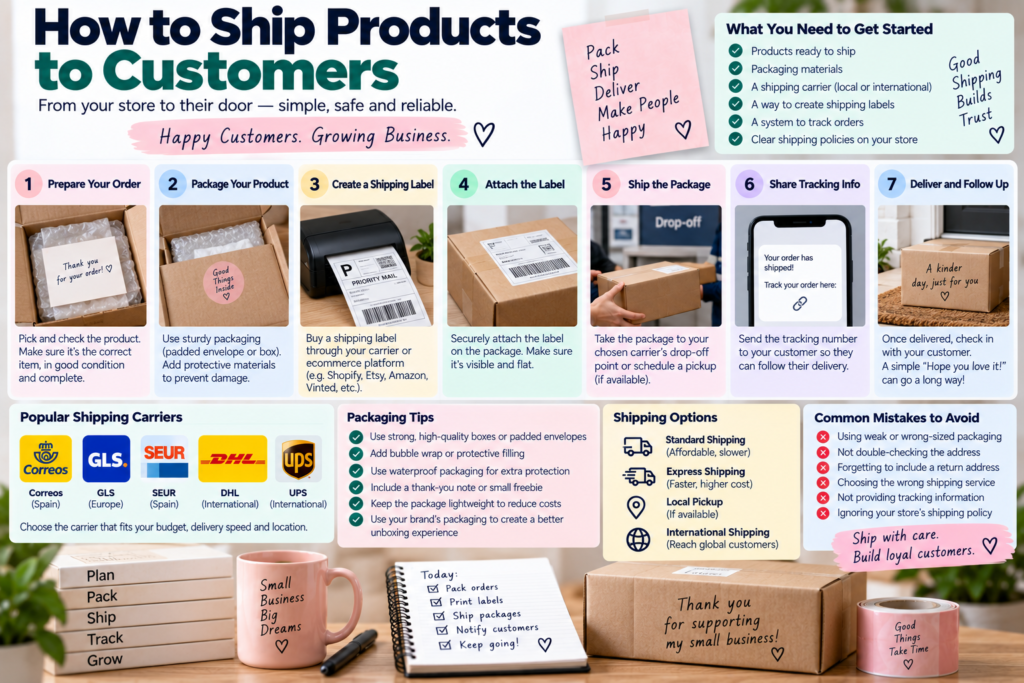
How to Ship Products to Customers
How to Ship Products to Customers
Figuring out how to ship products to customers is one of those parts of running an online store that sounds simple until you’re actually doing it. Between choosing carriers, setting shipping rates, packaging items safely, and handling the inevitable lost or damaged package, shipping touches nearly every part of the customer experience after checkout. This guide walks through exactly how to ship products to customers in a way that’s reliable, reasonably priced, and doesn’t eat into your margins more than necessary.
Why Shipping Deserves Real Planning, Not an Afterthought
New sellers often treat shipping as a detail to figure out once orders start coming in, but shipping decisions directly affect your pricing, your margins, and your customer satisfaction. A shipping experience that’s slow, confusing, or unexpectedly expensive at checkout is one of the most common reasons customers abandon a cart or leave a negative review, even when they were happy with the product itself. Planning your shipping approach before launch, rather than improvising it after your first order, prevents a lot of avoidable frustration on both sides.
Step 1: Decide Who’s Actually Handling Fulfillment
Before getting into carriers and rates, the more foundational decision is who packs and ships the order. Options include self-fulfillment (you personally pack and ship), dropshipping (your supplier ships directly to the customer), or a third-party logistics provider (3PL) that stores your inventory and handles fulfillment on your behalf. Each comes with different cost structures and different levels of control over the unboxing experience, so this decision shapes everything else about how you ship products to customers going forward.
Step 2: Choose Your Shipping Carriers
Most online sellers rely on a combination of national postal services and private couriers rather than committing to just one. In the US, this typically means choosing between USPS, UPS, FedEx, or regional alternatives, each with different strengths depending on package size, weight, and destination. The USPS small business shipping guide is a useful starting point for comparing rates and services if you’re shipping primarily within the US. Comparing rates across at least two or three carriers for your typical package size and weight range can reveal meaningful savings, particularly once volume increases.
Step 3: Decide on a Shipping Rate Strategy
How you charge customers for shipping affects both your margins and your conversion rate. Common approaches include:
- Free shipping — built into your product price, which tends to convert best but requires careful margin math
- Flat-rate shipping — a fixed fee regardless of order size, which is simple to communicate but can under- or over-charge depending on the actual order
- Real-time carrier rates — calculated at checkout based on actual weight and destination, which is more accurate but can surprise customers with higher-than-expected costs
- Free shipping above a threshold — encourages larger orders while still covering shipping costs on smaller ones
Many successful stores default to free shipping with the cost built into pricing, since unexpected shipping charges at checkout are one of the most common reasons customers abandon a purchase at the last step. Our guide on how to price products for an online store covers how to factor shipping costs into your pricing without eating into your margin.
Step 4: Package Products Properly
Packaging isn’t just about protecting the product during transit — it’s also part of the customer’s first physical impression of your brand. A few basics matter regardless of what you’re shipping: use packaging appropriately sized for the product (oversized boxes with excessive empty space both waste money and increase damage risk from items shifting during transit), use adequate cushioning for fragile items, and seal packages securely enough to survive automated sorting equipment, which is considerably rougher than manual handling.
If budget allows, small branding touches — a thank-you note, branded tape, or simple tissue paper — can noticeably improve the unboxing experience without significantly increasing cost, and this kind of detail is often what gets mentioned in positive reviews.
Step 5: Set Clear Shipping Expectations
Customers tolerate shipping times far better when they know what to expect upfront. Clearly stating estimated delivery windows on product pages and at checkout, rather than leaving customers to guess, reduces “where is my order” support messages significantly. If you’re using a fulfillment model like dropshipping where shipping times can be longer than customers might expect from a typical online purchase, being transparent about this upfront builds more trust than letting customers discover a extended wait after they’ve already paid.
Step 6: Provide Tracking and Order Updates
Automated order and shipping confirmation emails, ideally with tracking information included, dramatically reduce customer anxiety and support requests after checkout. Most ecommerce platforms and shipping tools offer this functionality built in or through a simple integration, so there’s rarely a good reason to leave customers without visibility into where their order actually is.
Step 7: Have a Plan for Problems
Lost packages, damaged items, and delivery delays happen regardless of how carefully you plan, so having a clear process for handling them before they occur prevents each incident from becoming a stressful, improvised decision. A straightforward policy — replace, refund, or reship within a defined timeframe — handled consistently builds trust even when something initially goes wrong, since customers generally judge a business more by how it resolves problems than by whether problems happen at all.
Using Shipping Software and Tools
As order volume grows, manually calculating rates and printing labels one at a time stops being a sustainable way to ship products to customers. Shipping software — whether built into your ecommerce platform or a dedicated tool like ShipStation or Pirate Ship — can batch-print labels, automatically apply the cheapest available rate across carriers, and sync tracking information back to your store. For a seller shipping even a handful of orders a day, this kind of automation saves meaningful time that’s better spent on product sourcing or marketing. Most tools also integrate with Google Analytics and your store’s order data, so you can track shipping costs and delivery performance alongside the rest of your business metrics rather than managing them separately.
Shipping as Part of the Broader Customer Experience
How you ship products to customers doesn’t exist in isolation — it connects directly to the trust and credibility you’re building with every other part of the store. Our guide on how to get visitors to trust your website and buy covers how clear policies, including shipping expectations, influence a visitor’s decision to complete a purchase in the first place. A customer who feels confident about when and how their order will arrive is considerably more likely to follow through at checkout than one left guessing.
This connection runs both directions: a smooth shipping experience reinforces the trust that got the sale in the first place, while a confusing or disappointing one can undo weeks of marketing effort in a single bad delivery experience. Treating shipping as a core part of the customer journey, rather than a purely operational afterthought, tends to produce better reviews and more repeat purchases over time.
Returns and How They Relate to Shipping
A returns policy is really just shipping in reverse, and it deserves nearly the same level of planning. Deciding upfront who pays for return shipping, how long customers have to initiate a return, and what condition items need to be in affects both customer satisfaction and your bottom line. A policy that’s too strict can quietly discourage first-time buyers who are hesitant to commit without an easy way out if the product doesn’t work for them; a policy that’s too generous can expose you to abuse. Clearly posting your returns policy alongside your shipping information gives customers the full picture before they ever need to use it, which itself can be a quiet trust signal that encourages the original purchase.
International Shipping Considerations
If you’re shipping products to customers outside your home country, additional factors come into play: customs documentation, import duties, longer and less predictable delivery times, and the question of who’s responsible for any customs fees the customer might be charged on arrival. Being upfront about these potential costs and timelines on your website prevents the kind of post-purchase surprise that leads to complaints and chargebacks. Many sellers start with domestic shipping only and expand into international markets once domestic fulfillment is running smoothly.
Common Shipping Mistakes to Avoid
Underestimating shipping costs when setting prices. Discovering after the fact that shipping costs more than budgeted for can turn a seemingly profitable sale into a loss.
Using packaging that’s too large or too small. Oversized packaging wastes money on dimensional weight charges; undersized packaging risks damage and returns.
No tracking or order status visibility. Leaving customers in the dark about their order status generates unnecessary support requests and anxiety.
Inconsistent handling of shipping problems. Resolving similar issues differently from customer to customer can feel unfair and damage trust, even when each individual resolution seems reasonable in isolation.
Ignoring packaging during the unboxing experience. Treating packaging as purely functional misses a low-cost opportunity to leave a positive, memorable impression.
How Shipping Costs Affect Your Overall Margins
Shipping is often one of the most underestimated costs in an ecommerce business, particularly for beginners calculating margins based only on product and advertising costs. Even with negotiated carrier rates, packaging materials, and the labor time to pack and ship orders add up in ways that aren’t always obvious until you track them carefully. Reviewing your actual shipping costs against what you’re charging customers on a regular basis — not just when setting up the store initially — helps catch margin erosion before it becomes a serious problem.
Frequently Asked Questions
What’s the cheapest way to ship products to customers? This depends on package size, weight, and destination, but comparing rates across multiple carriers and considering regional or postal options for lighter packages usually reveals meaningful savings compared to defaulting to a single carrier.
Should I offer free shipping on my online store? Many sellers find that free shipping, with the cost built into product pricing, converts better than charging shipping separately, since unexpected shipping fees at checkout are a common reason for cart abandonment.
How do I handle a package that gets lost in transit? Most carriers offer tracking and claims processes for lost packages. Having a clear internal policy for how you’ll resolve this with the customer — typically a replacement or refund — before it happens makes the situation much easier to handle calmly.
Do I need special packaging for fragile items? Yes, fragile items generally need additional cushioning and sometimes double-boxing to survive standard shipping handling, which is considerably rougher than most sellers initially assume.
How do I decide between self-fulfillment and using a 3PL? Self-fulfillment tends to work well at lower order volumes where the time cost of packing and shipping is manageable. Once volume grows to the point where fulfillment is consuming most of your available time, a third-party logistics provider often becomes worth the added cost, freeing you up to focus on product and marketing decisions instead.
Should I use the same carrier for every order? Not necessarily. Many sellers mix carriers based on package weight, size, and destination to get the best combination of cost and delivery speed, rather than committing exclusively to a single provider regardless of the specific shipment.
Reviewing and Improving Your Shipping Process Over Time
How you ship products to customers on day one doesn’t need to be how you ship them a year later. As order volume grows, it’s worth periodically revisiting carrier rates, packaging choices, and fulfillment methods to see whether a different approach now makes more sense than it did when the business was smaller. Carriers often offer better negotiated rates once you’re shipping consistent volume, and packaging suppliers may offer bulk discounts that weren’t worth pursuing at lower order counts.
Treating your shipping process as something to refine over time, rather than a decision you made once and never revisit, is one of the quieter ways successful sellers protect their margins as the business scales. A shipping setup that made sense for ten orders a week can become genuinely inefficient at a hundred, and catching that shift early saves real money.