New to online business? Start with our free 7-day roadmap and build your foundation step by step.
Get the Free Roadmap →Online Business
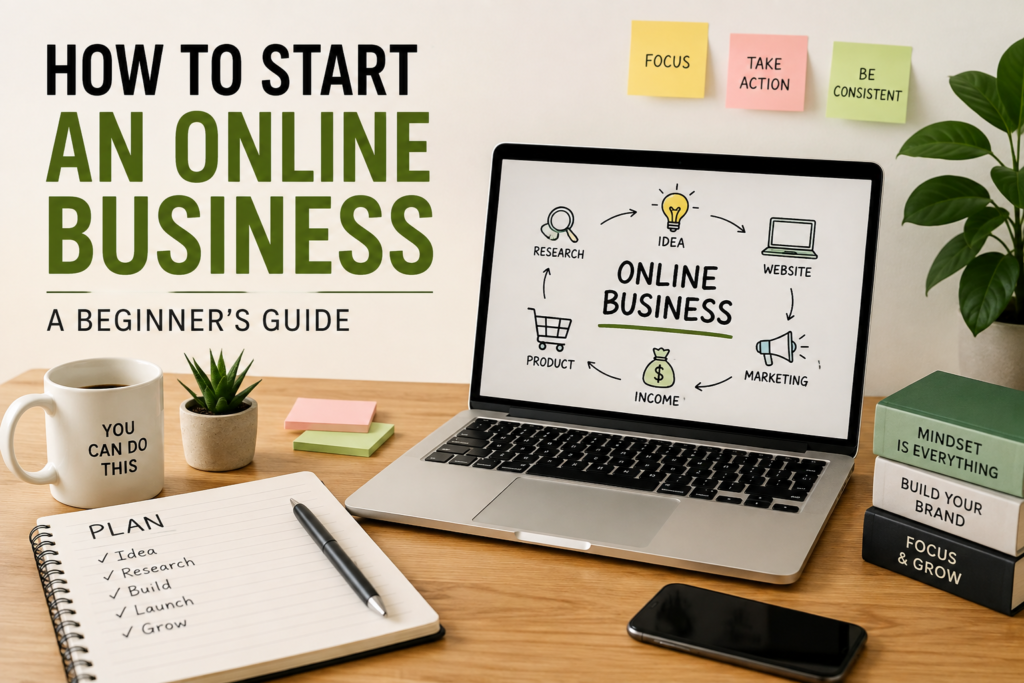
How to Start an Online Business: A Beginner’s Guide
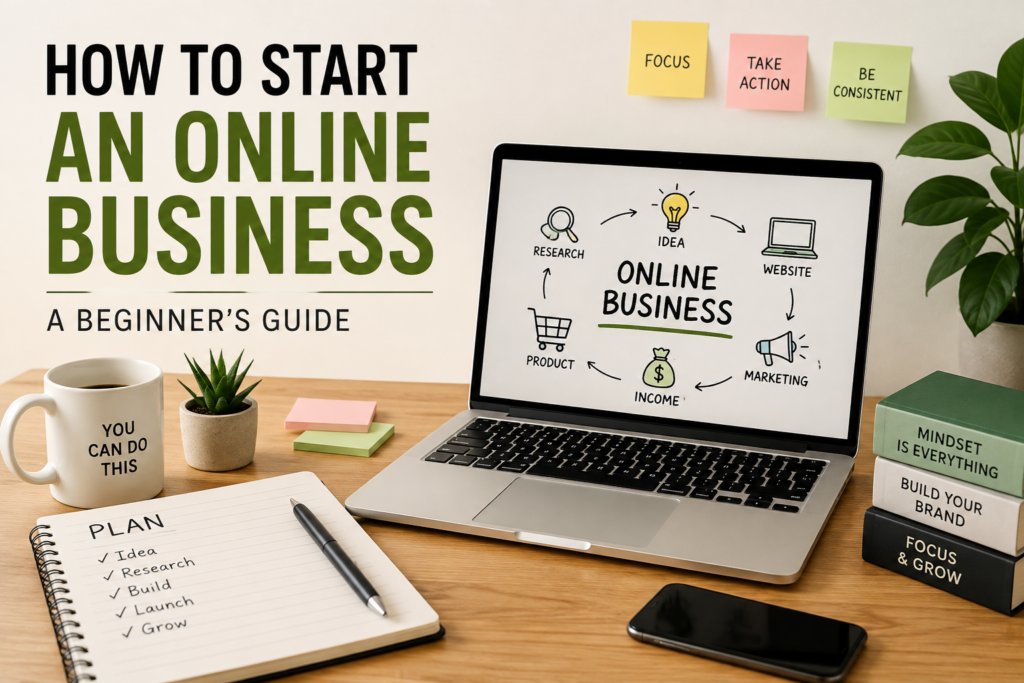
How to Start an Online Business: A Beginner’s Guide
Every successful online business started exactly where you are right now — with an idea, a lot of questions, and no clear roadmap for turning one into the other. Learning how to start an online business doesn’t require a technical background or a large upfront investment; it requires a clear sequence of decisions, made in the right order, so you’re not guessing at each step. This guide walks through that sequence from start to finish.
Step 1: Choose Your Business Model
Before anything else, decide what kind of online business you’re actually building. The main categories include:
- Ecommerce — selling physical products through your own store or a marketplace
- Digital products — courses, templates, ebooks, or software sold repeatedly without inventory
- Services — freelancing or consulting, selling your time and expertise directly
- Content and affiliate marketing — building an audience and monetizing through ads, sponsorships, or commissions
If you’re deciding between a product-based and a service-based start, our guide on how to start an online business with no product covers the lower-overhead options in more depth.
Step 2: Validate Your Idea Before Building Anything
It’s tempting to jump straight into building a website, but validating demand first saves considerable wasted effort. Check search trends, browse relevant communities, and look at whether similar products or services already have some demonstrated demand. If you’re specifically choosing a physical product, our guide on how to choose products to sell online walks through this validation process in detail.
Step 3: Define Your Target Audience
Learning how to start an online business successfully means getting specific about who you’re serving from the very beginning. A business built for “everyone” struggles to market itself effectively, since generic messaging rarely resonates deeply with anyone in particular. Get clear on who has the problem you solve, and where they already spend time looking for solutions.
Step 4: Choose Your Platform
Depending on your business model, this might mean an ecommerce platform like Shopify, a marketplace like Etsy or Amazon, a freelance platform, or simply a basic website and social media presence for a service-based business. Our guide on what is a selling platform and how does it work breaks down the trade-offs between building your own store and using an existing platform.
Step 5: Set Up the Basics
Regardless of model, a few foundational elements apply broadly:
- A domain and basic website, even a simple one to start
- A way to accept payment, whether that’s a payment processor or a platform’s built-in system
- Clear policies — pricing, terms, returns if applicable
- Basic trust signals — an About page, contact information, and transparency about who’s behind the business
Step 6: Price Your Offer
Whether you’re selling products or services, pricing needs to cover your real costs and leave room for sustainable margin, not just feel competitive. Our guide on how to price products for an online store walks through the actual calculation if you’re selling physical goods.
Step 7: Plan Your First Marketing Push
A business with no visibility doesn’t sell, no matter how good the underlying offer is. Decide on one or two channels to focus on first — content, social media, direct outreach, or paid ads — rather than trying to be everywhere simultaneously. Our guide on marketing for beginners: how to get your first customers covers exactly how to approach this earliest, hardest stage.
Step 8: Launch Before It Feels Perfect
One of the most common ways beginners delay actually starting an online business is waiting for everything to feel fully polished before launching. In practice, a functional, honest launch that you can learn and iterate from tends to produce better long-term results than months of preparation with zero real customer feedback to inform your decisions.
Step 9: Track What’s Working and Adjust
Once live, pay attention to actual data — website traffic, conversion rates, which marketing channels are producing results. Free tools like Google Analytics and Google Search Console make this accessible without requiring specialized software or technical expertise, and they’re worth setting up from the very first week rather than waiting until you have “enough” traffic to bother tracking it.
Step 10: Build Consistency Before Chasing Growth
Many beginners want to scale before they’ve actually built a stable, repeatable foundation. Focus first on consistent execution — regular content, reliable fulfillment, steady customer service — before investing heavily in growth tactics that assume operational stability you may not have fully established yet.
Picking a Niche Within Your Broader Model
Choosing a business model is only half the decision — within ecommerce, content, or services, there’s usually still a broader category than makes sense to tackle all at once. Learning how to start an online business successfully often means narrowing further than feels comfortable at first: not just “ecommerce” but a specific product category, not just “freelance writing” but a specific industry you understand well. This narrower focus makes marketing considerably easier, since your messaging can speak directly to a specific audience rather than trying to appeal broadly to everyone who might theoretically be interested.
How Long Does It Take to Start an Online Business?
This varies enormously by model. A service-based business like freelancing can technically begin within days, once you have a way to find clients. An ecommerce store takes longer, given sourcing, listing, and setup involved. A content or affiliate-based business takes the longest to show meaningful income, since it depends on building an audience first. Setting realistic expectations for your specific model prevents the discouragement that comes from comparing your timeline to a fundamentally different type of business.
How Much Money Do You Actually Need?
Startup costs vary considerably by model. Freelancing and consulting can start with essentially no capital beyond your existing skills and a way to find clients. Content and affiliate marketing similarly require time more than money. Ecommerce typically requires more upfront investment, whether for inventory, a platform subscription, or initial marketing spend — though models like dropshipping reduce this considerably by removing the need to hold inventory directly.
Choosing Between Full-Time and Part-Time Commitment
Most successful online businesses don’t start as a full-time leap from day one. Building the business alongside existing income — evenings, weekends, whatever time you can realistically dedicate — reduces financial pressure while you validate the idea and build initial traction. Transitioning to full-time once the business demonstrates consistent, sustainable income tends to be a lower-risk path than committing fully before any real validation has occurred.
Legal and Administrative Basics Worth Knowing Early
While this guide focuses primarily on the practical business-building steps, it’s worth being aware that most locations have some basic legal and tax requirements for operating a business, even a small, part-time one. This might include registering a business name, understanding sales tax obligations, or simply tracking income and expenses for tax purposes. Requirements vary considerably by country and region, so it’s worth a quick check with a local resource or professional early on, rather than treating this as something to figure out only once the business has grown significantly.
Common Mistakes Beginners Make
Skipping validation entirely. Building something nobody’s confirmed they want before you’ve invested significant time or money is one of the most expensive mistakes to make early on.
Trying to do everything at once. Attempting content marketing, paid ads, social media, and email simultaneously from day one spreads limited time too thin to execute any of them well.
Waiting for perfection before launching. Months of preparation without real customer feedback often produces a business built on assumptions rather than evidence.
Underpricing out of fear. New business owners frequently underprice their products or services, which undermines sustainability even when sales volume looks encouraging.
Giving up too early. Most online businesses take longer than beginners initially expect to show meaningful results — abandoning a genuinely viable idea after only a few weeks rarely gives it a fair, realistic chance.
Building Support Around Yourself
Starting an online business can feel genuinely isolating, especially without colleagues or a team to share the process with. Seeking out communities of other entrepreneurs — whether online forums, local meetups, or simply a few peers going through a similar stage — provides both practical advice and a meaningful sense that the challenges you’re facing are normal rather than a sign something’s uniquely wrong with your specific approach. This kind of support often proves just as valuable as any individual tactic covered in this guide, particularly during the inevitable slower stretches every new business goes through.
A Realistic First-Month Plan
If you’re starting completely from scratch, a reasonable first month looks like:
- Week 1 — Choose your business model and validate the core idea
- Week 2 — Set up the basics: platform, payment processing, pricing
- Week 3 — Create your first marketing content or outreach push
- Week 4 — Launch, track early results, and adjust based on what you’re learning
This structure gives you real, usable feedback within a month rather than months of preparation with nothing concrete to actually learn from.
Frequently Asked Questions
Do I need technical skills to start an online business? No. Most modern platforms are designed for non-technical users, with templates and built-in tools that handle the technical side without requiring coding knowledge.
What’s the easiest type of online business for a complete beginner? This depends on your existing skills, but service-based businesses like freelancing tend to have the lowest barrier to entry, since they don’t require inventory, a built audience, or significant upfront investment.
How much money do I need to start an online business? This varies enormously by model — some, like freelancing or affiliate marketing, require very little capital, while ecommerce typically requires more upfront investment for inventory or platform costs.
Can I start an online business while working a full-time job? Yes, and many successful entrepreneurs do exactly that, building the business during evenings and weekends before transitioning to it full-time once it demonstrates consistent income — this lower-pressure approach also gives you more room to genuinely test and adjust the idea without the financial urgency of needing it to work immediately.
5 thoughts on “How to Start an Online Business: A Beginner’s Guide”
Comments are closed.
[…] you are still working on your business idea, our guide on how to start an online business can help you think through the bigger […]
[…] you’re also considering other online business models, our guide on How to Start an Online Business: A Beginner’s Guide goes into the broader process of choosing and testing an online business […]
[…] more guidance, read How to Start an Online Business: A Beginner’s Guide and Ecommerce for Beginners: Everything You Need to […]
[…] You can also continue learning with Ecomlira’s Ecommerce for Beginners: Everything You Need to Know and How to Start an Online Business: A Beginner’s Guide. […]
[…] you’re still setting up the business itself, our guide on how to start an online business is a good place to begin first, since everything below builds on having a clear offer and […]