New to online business? Start with our free 7-day roadmap and build your foundation step by step.
Get the Free Roadmap →Marketing
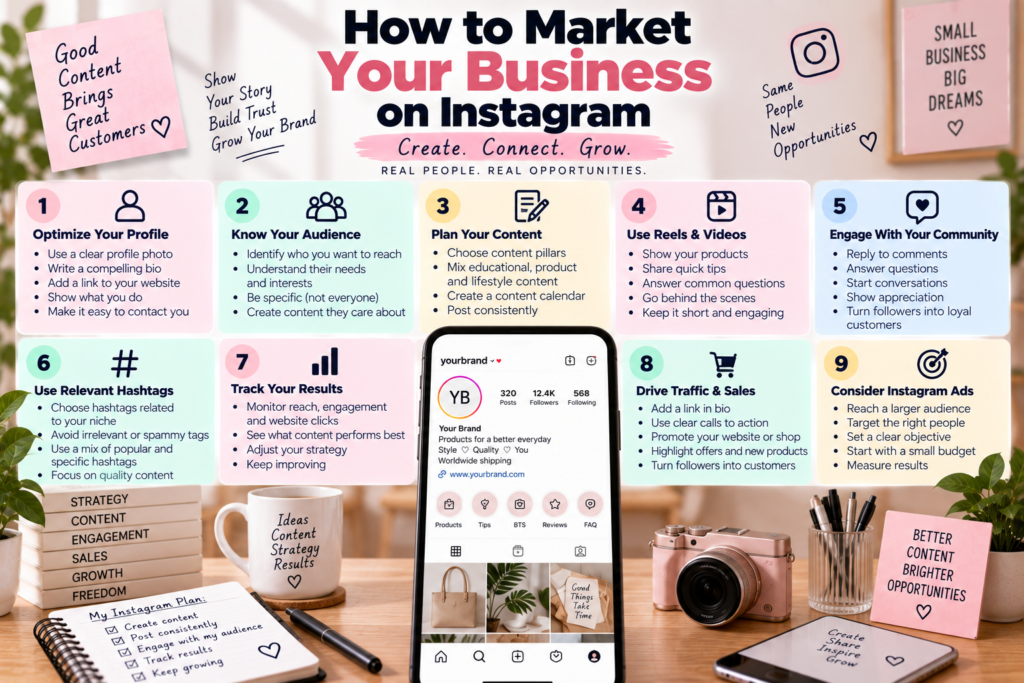
How to Market Your Business on Instagram
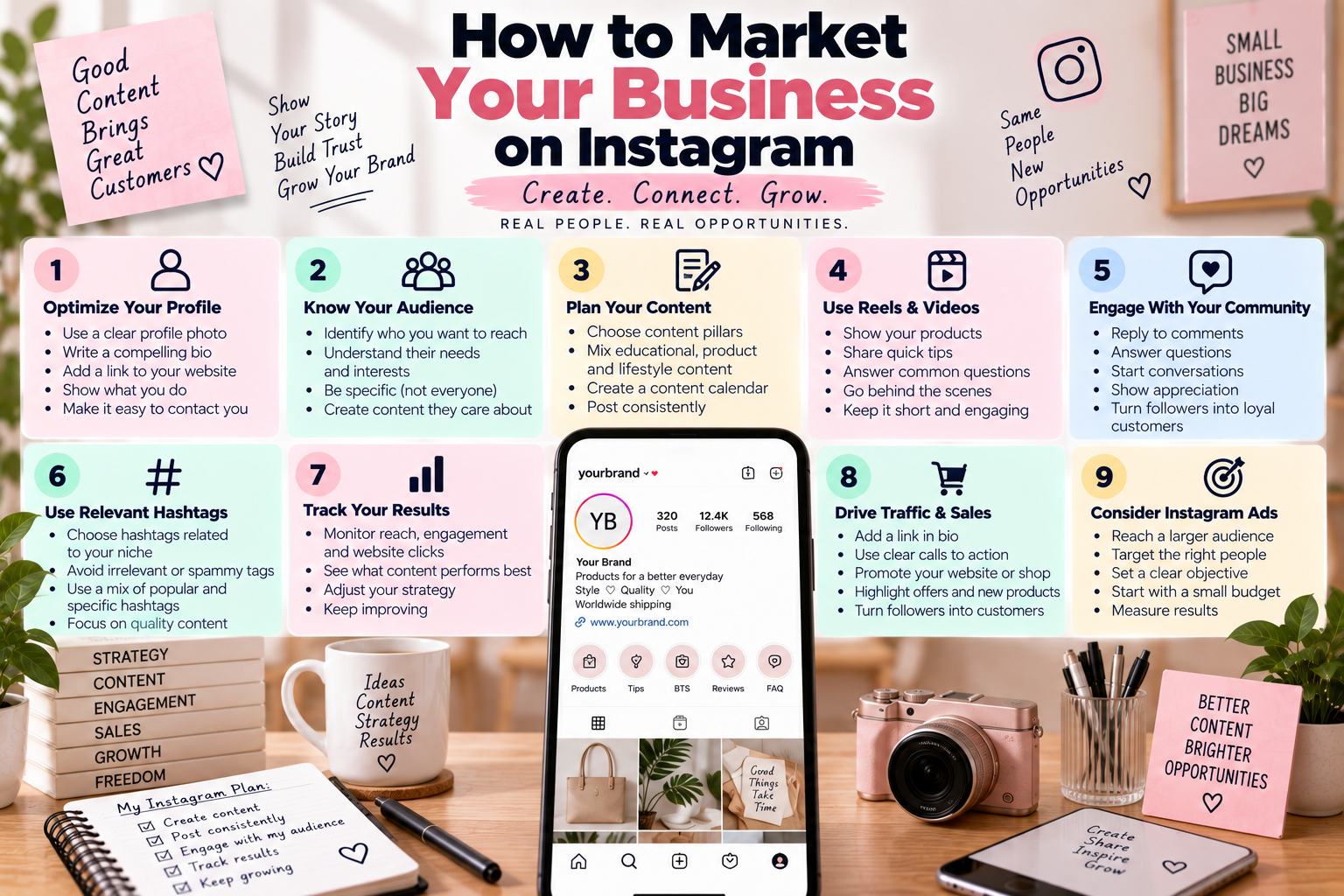
How to Market Your Business on Instagram
Instagram has quietly become one of the default places people go to check whether a business is legitimate before buying from it — even if they found you somewhere else first. That alone makes it worth getting right, regardless of whether you’re planning to make it your primary sales channel or just want a credible presence backing up the rest of your marketing. Learning how to market your business on Instagram properly means understanding both its strengths as a discovery platform and its quirks as an algorithm-driven ecosystem.
This guide covers exactly how to market your business on Instagram from a completely empty account, through building an actual audience that converts.
Set Up a Business Profile First
Before posting anything, switch to a business or creator account. This single step unlocks analytics, contact buttons, and access to Instagram Shopping if you’re selling physical products — none of which are available on a standard personal account. It’s a five-minute setup that pays off immediately once you start actually posting and want to see what’s working.
Define Your Content Pillars
Random, unplanned posting rarely builds momentum. To market your business on Instagram consistently, decide on 3-4 recurring content themes — for example, product features, behind-the-scenes content, customer stories, and educational tips relevant to your niche. Having defined pillars makes content planning considerably easier, since you’re choosing from a known set of angles rather than starting from a blank page every time.
Use a Mix of Content Formats
Instagram supports several distinct formats, and leaning on a mix tends to outperform relying on just one:
- Reels — short-form video, currently favored heavily by Instagram’s algorithm for reach
- Carousels — multi-image posts well-suited for tips, tutorials, or step-by-step storytelling
- Stories — casual, temporary content good for polls, behind-the-scenes moments, and quick engagement
- Single posts — strong for standalone product shots or announcements
Reels in particular tend to get pushed to non-followers more than other formats, making them a useful tool specifically for reaching new audiences rather than just engaging existing ones.
Write Captions That Actually Encourage Engagement
A caption that just describes the image is a missed opportunity. To market your business on Instagram effectively, captions should invite interaction — asking a genuine question, sharing a specific insight, or prompting a comment. Higher engagement signals to Instagram’s algorithm that your content is worth showing to more people, which creates a compounding effect over time.
Use Hashtags and Location Tags Strategically
A mix of niche-specific and moderately broad hashtags, combined with a location tag where relevant, helps new audiences discover your content. Avoid stuffing posts with only the most generic, oversaturated hashtags — these put you in competition with millions of other posts and rarely help a smaller account get discovered.
Engage, Don’t Just Broadcast
Marketing your business on Instagram isn’t purely about publishing content — actively responding to comments, engaging with your audience’s own posts, and participating in relevant conversations within your niche all contribute to the kind of community that drives sustainable growth. Accounts that treat Instagram as a one-way broadcast channel typically see slower, shallower growth than those that engage genuinely.
Post Consistently, Not Sporadically
Consistency matters more than raw frequency. A sustainable schedule — even 3-4 quality posts per week, maintained over months — tends to outperform an intense initial burst of daily posting that fizzles out after a few weeks. Instagram’s algorithm also tends to reward accounts that post predictably, since it signals an active, reliable presence.
Use Instagram Shopping If You Sell Physical Products
For ecommerce businesses specifically, Instagram Shopping lets you tag products directly in posts and Stories, letting interested followers move from discovery to purchase with minimal friction. Setting this up requires connecting your product catalog, but once configured, it turns your regular content into a passive, ongoing sales channel. If you’re still building out your actual store to connect, our guide on how to start an online store covers that foundational setup.
Building an Instagram Bio That Actually Converts
Your bio is often the first — and sometimes only — chance to convert a profile visitor into a follower or customer. A strong bio typically includes a clear, specific description of what you offer, a hint of personality or brand voice, and a single clear call-to-action link (a shoppable link-in-bio tool works well if you need to point to multiple destinations). Vague bios that don’t clearly state what the business actually does tend to lose visitors before they ever scroll to your first post.
How Instagram Fits Into a Broader Marketing Strategy
Instagram rarely works best in complete isolation — it tends to perform strongest as one piece of a broader approach that also includes content marketing, email, or other social platforms feeding into each other. Repurposing a blog post into a carousel, or using Instagram to build an email list you can market to more directly, are both common ways to make the platform work harder within your overall marketing effort rather than treating it as a standalone channel.
Collaborate With Others in Your Niche
Partnering with complementary (non-competing) accounts or micro-influencers in your space is one of the more efficient ways to market your business on Instagram to an audience that’s already relevant, without needing to build that reach entirely from scratch yourself. This doesn’t require a massive budget — many smaller creators are open to product exchanges or modest collaboration fees, especially early on.
Track What’s Actually Working
Instagram’s built-in analytics (available once you’re on a business account) show reach, engagement, and follower growth trends over time. Reviewing this data regularly — rather than posting purely on instinct — helps you understand what content genuinely resonates with your specific audience, so you can create more of what’s working and less of what isn’t.
Consider Instagram Ads Once You Understand What Converts
Once you have a sense of which organic content performs well, running targeted Instagram ads can help you reach a much larger, more precisely targeted audience than organic reach alone typically allows. Testing content organically first, then putting paid budget behind proven performers, tends to be more efficient than guessing blind with ad spend from day one.
Comparing Instagram to Other Social Platforms
Instagram tends to shine for visually appealing products, lifestyle brands, and businesses that benefit from polished imagery alongside more casual behind-the-scenes content. If you’re weighing it against other platforms, particularly for a younger audience or more experimental content style, our guide on how to market your business on TikTok covers a genuinely different set of dynamics worth understanding before choosing where to focus your energy first.
Common Mistakes to Avoid
Posting only promotional content. An account that’s constantly selling, with no genuine value or personality behind it, tends to see followers quietly disengage over time.
Ignoring Reels. Given how heavily the algorithm currently favors this format for reach, avoiding it entirely leaves significant growth potential on the table.
Inconsistent posting. Bursts of activity followed by long silences make it harder for the algorithm — and your audience — to build a consistent relationship with your content.
Buying followers or engagement. This inflates vanity metrics without producing real customers, and can actually hurt your reach by signaling low-quality engagement to the algorithm.
Ignoring analytics. Posting purely on gut feeling, without ever checking what’s actually resonating, tends to plateau growth much faster than a data-informed approach.
Frequently Asked Questions
How often should I post to market my business on Instagram effectively? Most brands see solid results posting 3-5 times per week, combined with regular Stories, though consistency over time matters more than hitting an exact number.
Do I need professional photos to market my business on Instagram? No. Many successful accounts use smartphone photography with consistent, simple editing rather than expensive professional shoots, especially in the early stages.
How long does it take to grow a following on Instagram? This varies significantly by niche and content quality, but sustainable growth typically takes months of consistent posting rather than happening overnight, especially without paid promotion.
Is Instagram still worth using for business in 2026? Yes. Despite competition from other platforms, Instagram remains widely used as both a discovery and credibility-check platform, making it valuable even for businesses that don’t rely on it as their primary sales channel — many customers still check a brand’s Instagram before completing a purchase elsewhere, simply to confirm it’s a real, active business.