New to online business? Start with our free 7-day roadmap and build your foundation step by step.
Get the Free Roadmap →Ecommerce
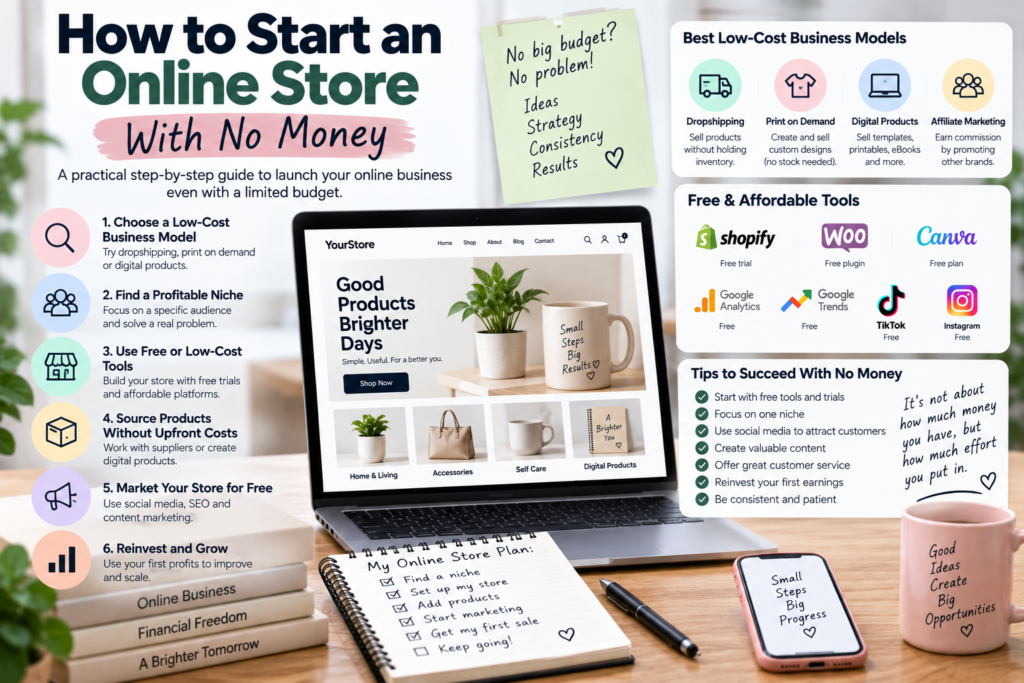
How to Start an Online Store With No Money
How to Start an Online Store With No Money
Starting an online store with no money sounds difficult, but you can reduce the amount of money you need by starting small and choosing a business model that doesn’t require a large inventory investment.
That doesn’t mean running a store is completely free. You may eventually need to pay for a domain, platform, payment processing, products, packaging, shipping, or marketing.
The goal is to start an online store with no money upfront, or with as little upfront spending as realistically possible, while testing whether people actually want what you’re offering.
If you haven’t decided what to sell yet, read How to Find Products to Sell Online first.
How to Start an Online Store With No Money
Can You Really Start an Online Store With No Money?
Yes, you can begin without a large budget, but you should be realistic about what “no money” means.
Some parts of running a business can be done for free, such as:
- Researching product ideas
- Studying competitors
- Creating organic social media content
- Writing useful blog content
- Talking to potential customers
- Testing different product ideas
Other parts may eventually cost money.
For example, selling physical products can involve product costs, shipping, payment fees, and returns.
That’s why the best approach is to avoid unnecessary expenses before you have evidence that your idea has potential.
1. Choose a Low-Cost Business Model
Your business model has a major effect on how much money you need to get started.
Dropshipping
With dropshipping, you don’t normally purchase large quantities of inventory in advance. When a customer places an order, the supplier fulfills it.
This can reduce your upfront inventory costs, although you’ll still have other expenses to consider.
Shopify’s official dropshipping guide explains how this model works.
Print-on-demand
Print-on-demand allows you to sell products featuring your designs without purchasing a large amount of inventory beforehand.
Products can include clothing, accessories, posters, and other customizable items.
Digital products
Digital products can be particularly inexpensive to start because there is no physical inventory or shipping.
Examples include:
- Ebooks
- Templates
- Printables
- Digital artwork
- Guides
- Online resources
Affiliate marketing
Affiliate marketing is another option if you don’t want to handle products yourself.
Instead of selling your own products, you promote products or services from another company and may receive a commission when someone makes a qualifying purchase through your affiliate link.
The Amazon Associates program is one example.
However, affiliate marketing is technically different from operating your own ecommerce store because you’re promoting another company’s products rather than processing the sale yourself.
2. Start With Products You Can Access Without Buying Inventory
If you’re trying to start with almost no money, avoid purchasing a large amount of stock immediately.
Instead, consider whether you can:
- Use print-on-demand
- Work with a dropshipping supplier
- Create digital products
- Sell products you already own
- Partner with a supplier
- Take preorders where appropriate and legally compliant
The right approach depends on the type of product you’re selling.
If you eventually decide to purchase inventory, start with a small quantity when possible rather than spending your entire budget before testing demand.
3. Research Products for Free
You don’t need to spend money to begin product research.
Start by looking at what people are already searching for and discussing.
You can use:
- Google Search
- Google Trends
- YouTube
- TikTok
- Amazon
- Etsy
- eBay
Look for recurring questions, complaints, product requests, and problems.
Google Trends can help you compare relative search interest over time. Google explains that its data represents relative interest rather than exact search volume, so use it as a research tool rather than a guarantee of demand.
You can access Google Trends for free.
4. Find a Specific Target Customer
When you have little money, being specific can help you avoid wasting your limited resources.
Instead of trying to sell to everyone, choose a clear audience.
For example:
People looking for affordable home organization products for small apartments.
Now you have a clearer idea of:
- What products to research
- What content to create
- What problems to discuss
- Where your customers might spend time online
- How you might position your store
A specific audience can also make your marketing easier because your message doesn’t have to appeal to everyone.
5. Create Content Instead of Paying for Advertising
Paid advertising can be useful, but it isn’t the only way to attract visitors.
If you have no advertising budget, focus on free traffic.
You could create:
- TikTok videos
- Instagram posts
- YouTube videos
- Pinterest content
- Blog articles
- Tutorials
- Product demonstrations
- Helpful guides
For example, if you sell kitchen organization products, you could create content about organizing small kitchens.
That content can attract people who may eventually become customers.
The important thing is not to make every piece of content feel like an advertisement.
Give people a useful reason to pay attention to your business.
6. Build Your Store as Simply as Possible
You don’t need a complicated website when you’re testing your idea.
Your initial store might only need:
- Homepage
- Product pages
- Cart
- Checkout
- Contact information
- Shipping information
- Return policy
- Privacy policy
Keep the design simple and make it easy for visitors to understand what you’re selling.
Avoid spending money on features that don’t solve an actual problem.
As your business grows, you can invest in better design, additional tools, photography, apps, and other improvements.
For more guidance, see How to Start an Online Store.
7. Use Free Tools Where They Make Sense
When you’re starting with a limited budget, look for free versions of tools before paying for subscriptions.
Depending on your needs, you may find free options for:
- Graphic design
- Keyword research
- Website analytics
- Email marketing
- Image editing
- Social media scheduling
- Project management
Free doesn’t always mean better.
If a paid tool saves you significant time or improves your business, it may eventually be worth the cost.
The point is to avoid paying for tools before you actually need them.
8. Use Social Media to Test Your Idea
Social media can be useful for testing online store ideas before investing heavily.
Create content related to your potential product.
Pay attention to:
- Views
- Comments
- Shares
- Saves
- Questions
- Direct messages
- Clicks
Don’t treat one viral post as proof that your product will succeed.
Instead, look for repeated signs of genuine interest.
For example, if people repeatedly ask where they can buy the product or ask questions about how it works, that may give you useful information.
9. Talk to Potential Customers
One of the cheapest forms of market research is simply talking to people.
Ask potential customers:
- What problem are you trying to solve?
- What products have you already tried?
- What do you dislike about current options?
- What would make you switch brands?
- What price range would you consider?
- Where do you normally shop?
Don’t ask only, “Would you buy this?”
People can say they like an idea without actually spending money on it.
Instead, try to understand their current behavior and problems.
10. Test Before Spending Big
Before investing heavily in inventory, branding, or advertising, test the idea.
You could:
- Create a simple product page
- Publish educational content
- Collect email subscribers
- Order a small sample
- Test organic social media content
- Ask potential customers for feedback
- Compare competitor products
The objective is to gather evidence.
You aren’t trying to prove that your idea will definitely succeed.
You’re trying to reduce uncertainty before spending more money.
This is also why How to Validate a Product Idea Before Selling Online is an important next step.
11. Don’t Confuse Revenue With Profit
One of the biggest mistakes beginners make is looking only at sales.
Imagine you sell a product for €25.
That €25 is revenue.
You may still need to pay for:
- Product cost
- Shipping
- Packaging
- Payment processing
- Platform fees
- Advertising
- Returns
- Taxes and other business expenses
What remains after your expenses is much closer to your actual profit.
Understanding this difference is essential when you’re working with a small budget.
12. Reinvest Carefully
If you make your first sales, you don’t necessarily need to spend everything immediately.
You could reinvest some of the money into areas that can improve the business, such as:
- Better product samples
- More inventory
- Packaging
- Product photography
- Website improvements
- Content creation
- Marketing
- Customer service
Prioritize expenses that can genuinely improve the customer experience or help you acquire customers.
Avoid buying expensive tools simply because another entrepreneur recommends them.
13. Consider Selling Through Marketplaces
You don’t always need to build a full standalone website immediately.
Depending on your product, you could explore marketplaces such as:
- Amazon
- Etsy
- eBay
These platforms already have shoppers, which can reduce the amount of work required to build an audience from zero.
However, marketplaces charge fees and have their own rules.
You also have less control over the customer experience than you typically would with your own store.
If you want to explore this option, our Selling Platforms section covers different places where you can sell online.
14. Build an Email List
An email list can become a valuable long-term asset.
You can encourage visitors to subscribe by offering something useful, such as:
- A guide
- A checklist
- A discount
- Helpful tips
- Product updates
- Educational content
Don’t add people to your list without appropriate permission.
Your emails should provide genuine value rather than constantly asking subscribers to buy something.
15. Keep Your Initial Goals Small
When starting an online store with no money, your first goal doesn’t need to be making thousands of euros.
Instead, set smaller milestones.
For example:
First: Find a promising product idea.
Then: Identify your target customer.
Next: Test whether people show interest.
Then: Make your first sale.
After that: Learn why the customer bought.
Finally: Improve and repeat what works.
Small milestones can make the process much more manageable.
What Can You Start Selling With Little Money?
There are several possibilities worth researching.
Digital products
Ebooks, templates, printables, and other downloadable products don’t require physical inventory.
Print-on-demand
You can create designs and sell products that are produced after customers place orders.
Dropshipping
You can work with suppliers that fulfill orders on your behalf.
Handmade products
If you already have the necessary materials and skills, you may be able to start with a small product range.
Products you already own
Some people begin by selling unused items they already have. This can help them learn how online selling works before investing in inventory.
There isn’t one perfect low-cost online business for everyone.
Choose something that fits your skills, resources, and target customer.
What You Shouldn’t Spend Money On First
When money is tight, prioritize the things necessary to actually test the business.
You probably don’t need to start with:
- An expensive logo
- A custom-designed website
- Dozens of paid apps
- Large inventory
- Expensive office space
- A huge advertising campaign
- Complicated automation
A professional appearance matters, but you can create a clean and trustworthy store without buying every premium tool available.
Focus on the product, customer, and buying experience first.
Is Starting an Online Store With No Money Realistic?
It can be, but you should think of it as starting with minimal upfront spending, rather than expecting everything to remain free forever.
Even if you begin without buying inventory, your business may eventually have expenses.
The advantage of starting small is that you can learn before committing significant money.
You can research for free, create content, test interest, and improve your idea before increasing your investment.
That approach can be much less risky than spending a large amount before you know whether customers want what you’re selling.
Frequently Asked Questions
Can I start an online store with absolutely no money?
You can begin researching and testing an idea without spending money, but operating a full ecommerce business usually involves some costs eventually. The exact amount depends on your business model and what you’re selling.
What is the cheapest way to start an online store?
There isn’t one universal cheapest option. Digital products, print-on-demand, dropshipping, and selling products you already own can reduce certain upfront costs, but each model has different expenses and trade-offs.
Can I start an online store without inventory?
Yes. Dropshipping and print-on-demand are two examples of models that can reduce the need to purchase and store inventory upfront. Digital products don’t require physical inventory either.
How can I get customers without paying for ads?
You can create useful content through social media, search engines, video platforms, email, and other organic channels. Building free traffic can take time, so don’t expect immediate results.
Can I sell online without a website?
Yes. Marketplaces such as Amazon, Etsy, and eBay allow sellers to reach customers without operating their own traditional ecommerce website. Read How to Start Selling Online Without a Website for more information.
Should I buy inventory before I make a sale?
Not necessarily. Depending on your business model, you may be able to test demand before purchasing a large amount of inventory. If you do need inventory, consider starting with a quantity that matches your budget and level of confidence.
Final Thoughts
Learning how to start an online store with no money is really about learning how to start without unnecessary spending.
You can research products, study customers, create content, test ideas, and learn about your market before investing heavily.
Once you have evidence that people are interested, you can gradually put more resources into your store.
Starting small doesn’t mean thinking small.
It means giving yourself the opportunity to learn, make mistakes, and improve without putting a large amount of money at risk from the beginning.